
How to Retrofit Your Facility for Ergonomics Without Major Downtime
Ergonomics Starts with How Work Is Performed
Most ergonomic problems stem from a few consistent operational issues:
- Manual lifting and repositioning of loads
- Poor workstation height and layout
- Inefficient movement of materials
- Congested or poorly defined work zones
Begin with a Targeted Operational Review
Successful ergonomic retrofits start with identifying where physical stress and workflow inefficiencies intersect. High-impact opportunities are usually found in tasks involving:
- Repetitive bending, twisting, or reaching
- Manual lifting of pallets, containers, or components
- Long-distance pushing or pulling
- Inconsistent work heights
- Crowded production or staging areas
Equipment Solutions That Deliver Ergonomic Performance
Jarvis provides material handling and workspace systems designed to reduce physical effort while improving operational flow.Lift Tables and Tilters
Lift tables and tilters address one of the most common ergonomic risks: bending and reaching to access loads. These systems position materials at optimal working height and angle, allowing operators to maintain neutral posture. They support ergonomic performance by reducing back and shoulder strain, improving accuracy and consistency, increasing workstation productivity, and supporting repetitive tasks without fatigueOverhead Cranes and Hoists
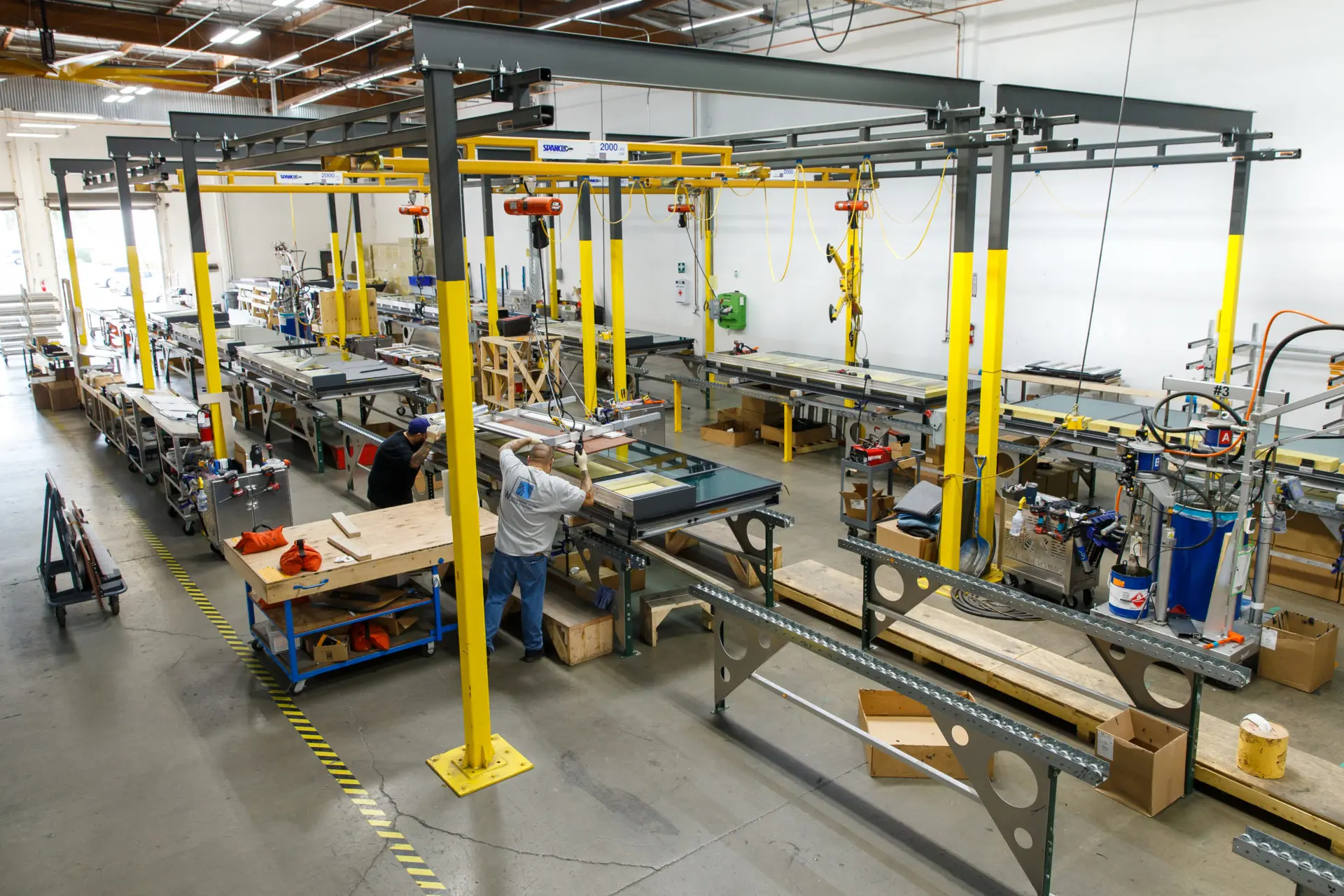
Manual handling of heavy or awkward loads remains one of the leading causes of workplace injuries. Overhead cranes and hoists remove that risk by transferring the lifting function from employees to mechanical systems. Workstation cranes, jib cranes, and hoist systems can be installed on existing structures or as freestanding units with minimal layout changes. These systems are particularly effective in machining operations, fabrication areas, maintenance zones, and shipping and receiving areas. By eliminating manual lifting, facilities gain both safety and speed while reducing long-term injury exposure.Mezzanines and Modular Offices
Ergonomics extends beyond lifting and includes how space is organized. Poor layout design creates congestion, excessive walking, and unnecessary exposure to noise and temperature extremes. Mezzanines and modular offices allow facilities to create structured work areas without major construction. These systems improve ergonomics by separating office and production functions, reducing floor congestion, improving visibility and supervision, and creating controlled environments for administrative and quality teams.Ergonomic Carts and Handling Equipment
Outdated carts and transport tools often require excessive force to move materials, increasing fatigue and injury risk. Modern ergonomic carts and handling equipment are designed for controlled movement and maneuverability.Implementing Improvements Without Downtime
One of the key advantages of equipment-based ergonomic retrofits is that they can be implemented without interrupting operations. Modular designs enable phased installations, off-hours implementation, incremental upgrades, and minimal disruption to production. Projects can be coordinated around operational schedules, ensuring that installations support productivity rather than hinder it. High-risk areas can be prioritized and addressed first, allowing solutions to gradually expand throughout the facility over time.
Key benefits include:
- Lower absenteeism
- Reduced workers’ compensation claims
- Improved morale
- Higher retention
- Greater operational reliability
Frequently Asked Questions (FAQs)
Can ergonomic upgrades really be done without stopping production?
Yes. Most ergonomic retrofits use modular equipment that can be installed in phases or during off-hours. Lift tables, cranes, carts, and modular offices can be added with minimal layout disruption, allowing facilities to improve safety without shutting down operations.
What is the fastest way to improve ergonomics in a facility?
The fastest improvements typically come from addressing manual lifting and workstation height. Installing lift tables, tilters, or ergonomic carts often delivers immediate reductions in strain and fatigue while improving productivity.
How do I know which equipment is right for my facility?
The best approach is to evaluate tasks where physical stress and inefficiency overlap—such as repetitive lifting, material transport, or congested work areas. Solutions should be selected based on workflow, safety requirements, space constraints, budget, and long-term operational goals rather than a single product type. Lorem ipsum dolor sit amet, consectetur adipiscing elit. Ut elit tellus, luctus nec ullamcorper mattis, pulvinar dapibus leo.