

Post Content
The Advantages of Modular Buildings
What Are Modular Buildings?
Modular buildings are pre-engineered, prefabricated structures composed of individual sections. These sections are manufactured off-site in a controlled factory environment, then transported to the project location and assembled to create a complete building. Unlike traditional construction, where every phase occurs on-site and can be affected by weather delays and scheduling conflicts, modular construction allows for the simultaneous fabrication of sections and on-site preparation.
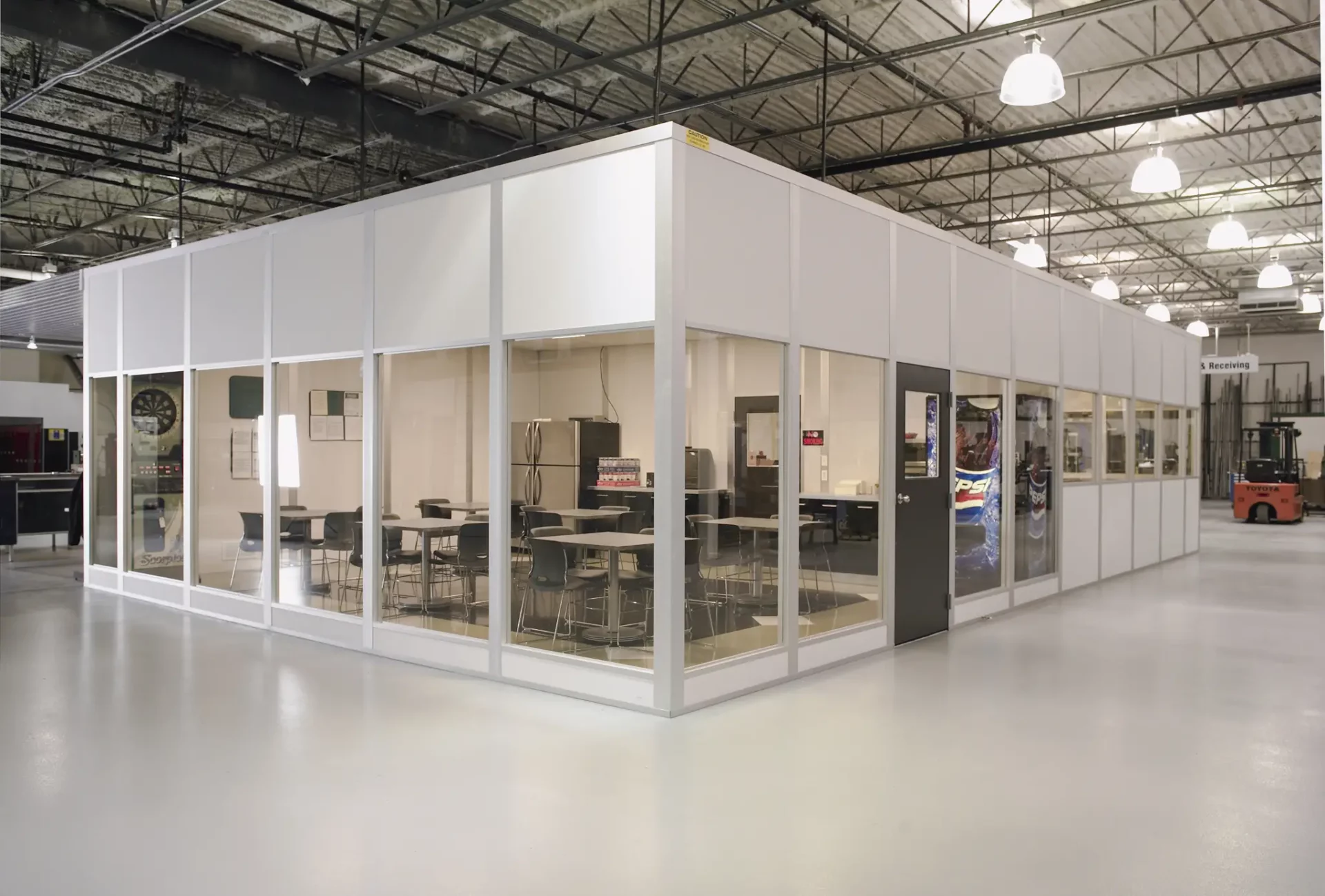
This streamlined approach yields faster completion times, lower costs, and consistent quality. Modular buildings can be used for temporary and permanent purposes. They are commonly installed inside existing warehouses, production facilities, or outdoors on pre-structured foundations.
Key Benefits of Modular Buildings
Faster Construction and Installation
One of the most significant advantages of modular buildings is the speed of installation and use. Because the wall panels and parts are constructed in a factory while site preparation is underway, the project’s overall timeline is significantly shortened. Many modular installations can be completed in days or weeks rather than months, depending on the scope of the build.
This accelerated timeline allows businesses to:
- Resume operations more quickly
- Avoid extended downtime
- Respond faster to changing space requirements
- Support growth without long construction delays
Minimal interruption to daily operations
Modular buildings are flexible in construction and can be assembled during regular working hours or after business hours. This makes them an ideal solution for workplaces that prioritize uninterrupted productivity. Each modular section is designed and prefabricated off-site, minimizing on-site construction time and limiting disruptions to daily operations. Additionally, this method enables customization and scalability, allowing organizations to adapt their workspace without the extensive downtime typically associated with traditional construction methods.Cost-Effectiveness and Budget Control
Modular construction provides predictable costs and minimizes financial surprises. The factory-based production process reduces labor inefficiencies and material waste, lowering overall project expenses.
Additional cost benefits include
- Reduced on-site labor requirements
- Shorter project schedules
- Fewer weather-related delays
- Lower rework and material waste
Tax Advantages of Modular Buildings and Offices
Modular offices often qualify for significant tax write-offs under IRS Section 179 and bonus depreciation, allowing businesses to deduct up to 100% of the purchase price (up to $1.17 million in 2025) in the year they are placed in service. One of the key advantages of modular offices is that they are classified as relocatable tangible personal property. This designation allows businesses to depreciate these assets over a much shorter 5- to 7-year period, as opposed to the 39-year depreciation schedule required for traditional brick-and-mortar construction. This accelerated depreciation increases cash flow in the early years of asset ownership and facilitates investment in further growth and expansion.Customization and Design Flexibility
Modern modular buildings are not one-size-fits-all. They can be fully customized to meet specific operational needs, including:
- Office layouts
- Conference rooms
- Break areas
- Clean rooms
- Training facilities
- Production support spaces
Sustainability and Environmental Benefits
Sustainability is another key advantage of modular construction. Factory-controlled building processes significantly reduce material waste compared to traditional job-site construction.
Modular buildings can be designed with:
- Energy-efficient insulation
- LED lighting
- Low-emission materials
- Climate control systems
- Solar-ready features
Consistent Quality and Safety Standards
Building in a controlled factory environment allows for higher consistency and stronger quality control. Each module undergoes inspection and testing before delivery to ensure it meets applicable building codes and safety standards.
This controlled process results in:
- Precise construction tolerances
- Durable materials
- Improved structural integrity
- Reliable performance
Why Modular Buildings Make Sense for Industrial Facilities
For manufacturing plants and warehouses, space is directly tied to productivity. Modular buildings provide a way to add offices, meeting rooms, inspection areas, or enclosed workspaces without altering the facility’s core structure.
They are particularly valuable for:
- Separating administrative staff from production areas
- Improving temperature control and noise reduction
- Creating dedicated work zones
- Enhancing safety and compliance
- Supporting process efficiency
Frequently Asked Questions (FAQs)
Are modular buildings only meant for temporary use?
No. While modular buildings can be used for temporary or transitional needs, they are also designed for permanent applications. Modern modular structures meet building codes and safety standards and can serve as long-term offices, production support areas, and operational spaces.
Can modular buildings be installed inside existing facilities?
Yes. Modular buildings are frequently installed inside offices, warehouses, and manufacturing plants. They provide enclosed environments for offices, quality control areas, or break rooms without requiring major renovations to the existing structure. Installation can often be completed with minimal disruption to daily operations.
How customizable are modular buildings?
Modular buildings are highly customizable. They can also be expanded or reconfigured later, making them a flexible solution for growing or changing facilities.